

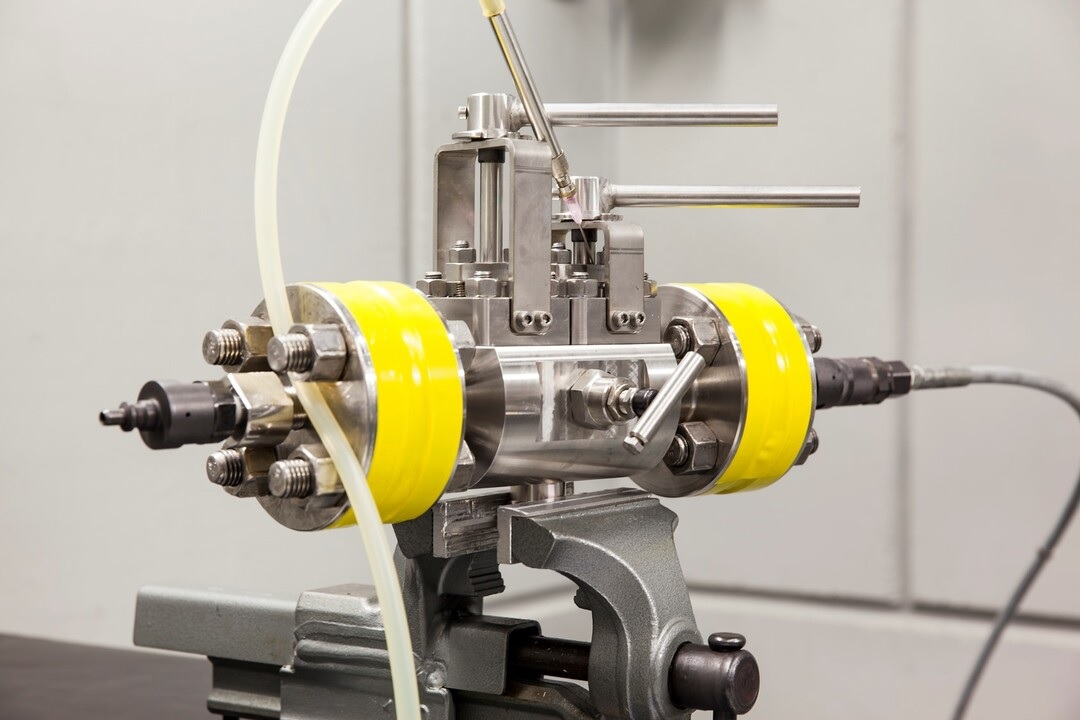
Fugitive emissions have become one of the most closely scrutinized environmental issues in industrial facility management. For process engineers, plant managers, and reliability teams, pressure to identify and eliminate emission sources is increasing from regulators, customers, and internal sustainability goals alike. Valves, as one of the most common components in any process system, are frequently at the center of this challenge. Understanding how industrial valve manufacturers have advanced their designs to address fugitive emissions is essential for any operations team working toward tighter environmental compliance.
This article breaks down what fugitive emissions are, why valves are a primary contributor, and how modern valve design principles are helping industrial facilities meet today’s regulatory demands without sacrificing performance or reliability.
What Are Fugitive Emissions?
Fugitive emissions are unintended releases of gases or vapors from process equipment into the surrounding environment. Unlike stack or vent emissions, which are managed through controlled outlets, fugitive emissions escape from seals, packing, flanges, and other connection points throughout a process system.
In industrial environments, fugitive emissions commonly consist of volatile organic compounds (VOCs), hydrocarbons, steam, and other process media. They can occur from a wide range of equipment, including pumps, compressors, flanges, and valves.
Valves, however, represent a disproportionately large share of fugitive emission sources in most process facilities. Studies conducted in petrochemical and chemical processing plants have consistently identified valve stem packing as one of the leading contributors to total site VOC emissions. This makes valve design and selection a critical lever for any facility working to reduce its environmental footprint.
Regulatory Drivers: Why Compliance Pressure Is Increasing
Fugitive emissions are regulated under several frameworks across different industries and regions. In the United States, the Environmental Protection Agency (EPA) has established specific requirements under its Leak Detection and Repair (LDAR) programs, which require facilities to regularly monitor equipment for emissions and repair leaks within defined timeframes.
Relevant standards and programs include:
- EPA 40 CFR Part 63 (National Emission Standards for Hazardous Air Pollutants), which covers specific industry categories including chemical manufacturing and petroleum refining
- EPA Method 21, which defines the protocol for detecting fugitive emissions using a portable hydrocarbon analyzer
- ISO 15848, an international standard that defines testing and qualification procedures for industrial valves in terms of fugitive emission performance
- API Standard 624 and API 641, which provide type-testing requirements for rising stem valves and quarter-turn valves used in refinery and petrochemical service
Beyond regulatory requirements, many large industrial operators have adopted voluntary emissions reduction targets as part of broader ESG (Environmental, Social, and Governance) commitments. This has expanded the compliance conversation beyond minimum legal requirements and placed greater emphasis on proactive emission management at the equipment design level.
Why Valves Are a Primary Emission Source
The valve stem is the primary point of potential fugitive emission in a valve assembly. As the stem moves to open or close the valve, it must pass through a sealing arrangement, typically referred to as packing. This packing prevents process fluid from escaping along the stem.
Over time, several factors can compromise the effectiveness of stem packing:
- Thermal cycling, which causes packing materials to expand and contract repeatedly, reducing their ability to maintain a tight seal
- Mechanical wear from frequent valve operation
- Packing compression loss, which occurs as packing settles and loses contact pressure against the stem
- Chemical attack, where aggressive process fluids degrade packing materials over time
- Incorrect installation, leading to uneven loading or premature failure
In high-cycle applications, or in service with high-temperature steam or aggressive chemical media, these factors accelerate. Without proper design provisions, even a well-maintained valve can become a significant emission point.
How Modern Valve Design Addresses Fugitive Emissions
Significant advances in valve design have been made over the past two decades specifically to address fugitive emissions. These improvements span materials, geometry, testing protocols, and installation provisions.
Low-Emission Packing Systems
One of the most impactful developments in fugitive emission control has been the advancement of low-emission packing materials and configurations. Modern low-emission packing systems typically use expanded graphite or PTFE-based materials, which offer superior sealing performance and resilience across a wide range of temperatures and service conditions.
These packing systems are engineered to maintain a consistent radial seal load on the valve stem even as the packing relaxes over time. Some designs incorporate live-loading, which uses spring elements, often spring disc washers, to continuously apply a compensating force to the packing gland as the packing settles. This helps maintain the sealing effectiveness between maintenance intervals without requiring frequent manual adjustment.
When combined with precision-ground, hardened valve stems with tight surface finish tolerances, these systems can achieve emission performance levels well below regulatory thresholds, even in high-cycle or thermally demanding applications.
ISO 15848 and API 624/641 Qualification Testing
A meaningful shift in industrial valve procurement has been the increased adoption of type-tested, low-emission certified valve designs. Under ISO 15848 and API 624/641, valves must undergo rigorous laboratory testing that simulates real-world service conditions, including thermal cycling and mechanical cycling of the stem, while emissions are measured at the packing area.
Valves that successfully pass these tests are assigned a specific emissions classification, which gives procurement teams and engineers a quantifiable basis for comparison when selecting equipment. For facilities subject to LDAR monitoring programs, specifying type-tested valves can reduce both the frequency of detected leaks and the cost burden of ongoing monitoring and repair.
When reviewing valve specifications for compliance-sensitive applications, engineers should confirm whether a valve has been independently type-tested to a recognized standard and at what test conditions that certification was obtained.
Bellows Seals for Zero-Emission Applications
For the most demanding applications, where zero-leakage at the stem is required, bellows-sealed valve designs eliminate the valve stem packing entirely. In a bellows-sealed design, the stem is enclosed within a metallic bellows that acts as the primary seal. The bellows is welded to both the valve bonnet and the stem, creating a hermetically sealed assembly.
Bellows-sealed valves are commonly used in applications involving highly toxic process media, where even trace emissions are unacceptable, as well as in ultra-high vacuum systems and certain pharmaceutical or food processing applications. While they carry a higher initial cost and require careful consideration of cycle life and pressure limits, they represent the most reliable solution for emission control in critical service.
Improved Gland Follower and Bonnet Design
Geometry improvements to the gland follower and bonnet area of the valve have also contributed to better emission control. Modern designs minimize the length of the stem path through the packing, reducing the surface area where leakage can occur. Guided and self-aligning gland followers reduce the risk of uneven packing compression, which is a common root cause of localized leakage.
In high-pressure and high-temperature applications, such as steam turbine trip and throttle valves used in power generation, bonnet design must also account for thermal gradients that can distort sealing surfaces. Careful material selection and geometry engineering are required to maintain alignment and sealing integrity across the full range of operating conditions.
Valve Selection for Emission-Sensitive Applications
When specifying valves for applications where fugitive emission compliance is a requirement, the following considerations are worth reviewing with your engineering or procurement team:
- Confirm the applicable regulatory standard for your facility and process category, as LDAR program requirements vary by industry and specific chemical service
- Request documentation of emission testing for valves being considered, and verify the test conditions align with your process temperature and pressure range
- Specify packing material appropriately for your process fluid chemistry and operating temperature; generic packing materials may not perform adequately in all service conditions
- Consider live-loaded packing as a standard specification in high-cycle or thermally demanding service, rather than as an option
- Evaluate total lifecycle cost, including the cost of LDAR monitoring, repair events, and potential regulatory penalties, not just the initial equipment price when comparing valve options
Operational Practices That Support Valve Emission Control
Even the best-designed valve will underperform if operational and maintenance practices are not aligned. Facilities that consistently achieve strong emission compliance typically share several common practices:
- Regular packing inspection and tightening schedules as part of preventive maintenance programs
- Prompt response to LDAR detections, which prevents small leaks from growing into larger emission events
- Proper valve installation, including correct packing gland torque and alignment verification
- Documentation and tracking of valve performance history, allowing maintenance teams to identify chronically leaking valves for potential replacement or upgrade
In plants with high valve counts, software-based LDAR tracking tools can help prioritize repair activities and demonstrate compliance performance over time to regulators and auditors.
Conclusion
Reducing fugitive emissions from process valves is both a regulatory requirement and a practical operational priority. As environmental standards continue to tighten and facilities face greater scrutiny on their emission performance, the design and specification of process valves has become increasingly important.
Modern valve engineering, from advanced packing systems and live-loading to ISO-certified low-emission designs and bellows-sealed configurations, provides process engineers with the tools to meet compliance requirements without compromising the reliability and durability their operations depend on. Working with experienced industrial valve manufacturers who understand the specific demands of your process, industry standards, and emission performance targets is one of the most effective steps a facility can take toward long-term compliance and environmental performance.
For facilities evaluating their current valve specifications or responding to new compliance requirements, a review of installed valve designs against current low-emission standards is a practical starting point. The technology exists to address this challenge. The key is matching the right engineered solution to each specific application.
